License Guide
Nail Technician License Requirements by State
How Do You Get a Nail Technician License?
To get a nail technician license, you finish your state's required school hours, pass the board exam and apply to the state board. Every state except Puerto Rico licenses nail work separately, and the most common requirement is 300 hours, though the range runs from a 12-hour course in Alaska to 750 hours in Alabama. Look up your state on the license requirements hub, then compare nail tech schools that meet it.
What a Nail Technician License Lets You Do
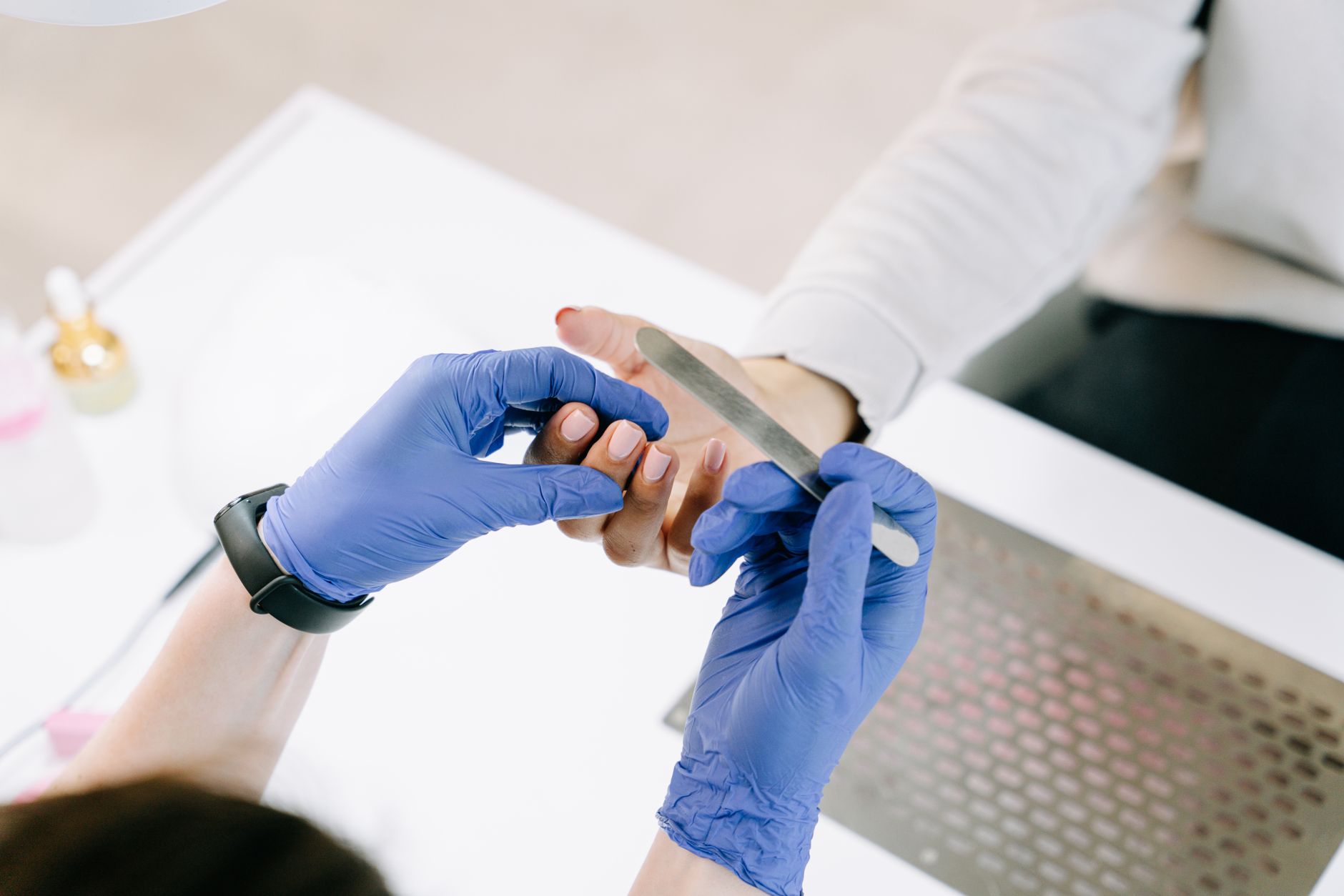
A nail license lets you do manicures, pedicures and artificial nail work for pay. The title changes from state to state (manicurist, nail technician, nail specialist, nail technologist), but the job is the same. It does not cover hair, facials or waxing, except where a state adds an endorsement. Alabama, for example, offers a manicurist/waxer license that adds 160 hours of waxing.
Nearly every jurisdiction licenses nail work on its own. Puerto Rico is the exception: manicure and pedicure are part of its beauty specialist exam rather than a separate license. Nebraska licenses nail technicians but lets anyone do natural-nail manicures and pedicures without one.
The Steps to a Nail Technician License
The order matters here, because most boards won’t schedule your exam until the school reports your hours.
- Check your state’s hours on its state license page, since the number sets how long school takes.
- Enroll in a board-approved program (or a registered apprenticeship where the state allows one).
- Finish the hours. The school reports them to the board or gives you a certificate of completion.
- Apply for the exam and pay the fee.
- Pass the written and practical exams, where your state requires both.
- Receive your license and renew it on your state’s cycle.
Nail Technician License Requirements by State
Here is what each state requires for a nail license, from the boards’ own pages and statutes, checked in November 2026. For Georgia, New Jersey, New Mexico, West Virginia and Arkansas, use the board details on each state page.
| State | License title | School hours | Apprenticeship route | Minimum age |
|---|---|---|---|---|
| Alabama | Manicurist | 750 | 1,200 hours | 16 |
| Alaska | Manicurist | 12 | ||
| Arizona | Nail Technician | 600 | Yes | 16 |
| California | Manicurist | 400 | 3,200 hours | 17 |
| Colorado | Nail Technician | 600 | 16 | |
| Connecticut | Nail Technician | 100 | ||
| Delaware | Nail Technician | 300 | 600 hours | |
| District of Columbia | Manicurist | 350 | 17 | |
| Florida | Nail Specialist (registration) | 180 | 16 | |
| Hawaii | Beauty Operator: Nail Technician | 350 | 700 hours | 16 |
| Idaho | Nail Technician | 400 | 800 hours | 16.5 |
| Illinois | Nail Technician | 350 | 700 hours | 16 |
| Indiana | Manicurist | 450 | 18 | |
| Iowa | Nail Technologist | 325 | ||
| Kansas | Nail Technician (Manicurist) | 350 | 17 | |
| Kentucky | Nail Technician | 450 | 18 | |
| Louisiana | Manicurist | 500 | 16 | |
| Maine | Nail Technician | 200 | 400 hours | |
| Maryland | Limited Nail Technician | 250 | Yes | 17 |
| Massachusetts | Manicurist | 100 | ||
| Michigan | Manicurist | 600 | Yes | 17 |
| Minnesota | Nail Technician | 350 | 17 | |
| Mississippi | Nail Technician | 350 | 700 hours | 16 |
| Missouri | Manicurist (Class MO) | 400 | 800 hours | 17 |
| Montana | Manicurist | 400 | 2,000 hours | 18 |
| Nebraska | Nail Technician | 300 | 17 | |
| Nevada | Nail Technologist | 600 | 1,200 hours | 18 |
| New Hampshire | Manicurist | 300 | Yes | |
| New York | Nail Specialist | 250 | Yes | 17 |
| North Carolina | Manicurist | 300 | ||
| North Dakota | Manicurist | 350 | 2,000 hours | 16 |
| Ohio | Manicurist | 200 | 16 | |
| Oklahoma | Manicurist/Nail Technician | 600 | 1,200 hours | 16 |
| Oregon | Nail Technology Practitioner Certificate | 241 | ||
| Pennsylvania | Nail Technician (limited license) | 200 | 16 | |
| Rhode Island | Manicurist | 300 | 18 | |
| South Carolina | Nail Technician | 300 | 16 | |
| South Dakota | Nail Technician | 400 | 400 hours | 18 |
| Tennessee | Manicurist | 600 | 16 | |
| Texas | Manicurist | 600 | 17 | |
| Utah | Nail Technology License | 300 | 300 hours | |
| Vermont | Nail Technician | 200 | 300 hours | |
| Virginia | Nail Technician | 150 | Yes | |
| Washington | Manicurist | 600 | 800 hours | 17 |
| Wisconsin | Manicurist | 300 | ||
| Wyoming | Nail Technician | 400 | 16 |
A blank cell means the board’s rules set no figure for that field. “Yes” means the state allows an apprenticeship without stating a separate hour total.
Rules That Recently Changed
- Michigan raised its manicurist requirement to 600 hours for students who began training on or after July 1, 2024; earlier students needed 400.
- Illinois adds a 700-hour apprenticeship route from January 1, 2027, and offers its nail exam in five languages from October 1, 2026.
- Montana began accepting a 2,000-hour registered apprenticeship on November 22, 2025.
- Oregon has required 241 hours plus 70 practical operations and 40 hours of career development and Oregon law since July 1, 2024.
Apprenticeship Instead of School
Where a state allows it, an apprenticeship lets you train in a working salon instead of a school, usually for more hours:
- Alabama: 1,200 apprentice hours over two years under a manicurist licensed at least five years. School and apprentice hours can’t be combined.
- Delaware: 600 apprentice hours, completed in 6 weeks to 12 months.
- Idaho: 800 hours in a cosmetology establishment under a licensed instructor, with a licensed nail technician on site.
- Maryland: 8 months as a registered apprentice.
- New York: one year as a licensed nail specialty trainee plus a 27-hour trainee course.
- Nevada: 1,200 hours as a registered apprentice, or 4 years of documented practice outside Nevada.
The Nail Technician Exam
Most states test you twice: a written theory exam, often with a state law section, and a practical exam where you perform services under observation. Many states use the national NIC nail technology exams, given by PSI, Prometric or Prov, including Delaware, Idaho, Iowa, Maine, Montana, Nebraska, Rhode Island, South Carolina, South Dakota, Utah and Wyoming. California, Texas, Tennessee and Alabama use PSI exams.
A few states skip the board exam:
- Florida issues a nail specialist registration after 180 hours with no state exam.
- Connecticut requires 100 hours and an attestation that you follow infection-control guidelines.
- Alaska has the school test its 12-hour basic course; the advanced manicurist endorsement needs a written exam.
Where a board sets a passing score, it is 70% or 75%. Kansas, Missouri, Montana and Oklahoma each set 75% per exam, and Indiana sets 70%.
Nail Technician License Requirements by State
| State | License | Hours | Minimum age | Exams |
|---|---|---|---|---|
| Alabama nail license | Manicurist | 750 | 16 | Written and practical exams (PSI) |
| Alaska nail license | Manicurist | 12 | No state exam for the basic manicurist license; the school tests the 12-hour course.... | |
| Arizona nail license | Nail Technician | 600 | 16 | Written and practical examinations |
| Arkansas nail license | Manicurist | 600 | 16 | Written core and law test (Prov), practical test and state law exam |
| California nail license | Manicurist | 400 | 17 | Written examination (PSI) |
| Colorado nail license | Nail Technician | 600 | 16 | Written (theory) and practical exams through PSI |
| Connecticut nail license | Nail Technician | 100 | No examination in the statute; applicants attest to compliance with infection... | |
| Delaware nail license | Nail Technician | 300 | NIC written theory and practical exams through Prometric | |
| District of Columbia nail license | Manicurist | 350 | 17 | Written exam through ProV and a practical exam |
| Florida nail license | Nail Specialist (registration) | 180 | 16 | No state examination required for the registration |
| Georgia nail license | Nail Technician | Board-approved written and practical exams in English (PSI, NIC), minimum 70% on each... | ||
| Hawaii nail license | Beauty Operator: Nail Technician | 350 | 16 | Nail technology theory examination (PSI; NIC theory exam accepted) |
| Idaho nail license | Nail Technician | 400 | 16.5 | NIC written and practical examinations |
| Illinois nail license | Nail Technician | 350 | 16 | Nail technician examination authorized by IDFPR; from October 1, 2026 offered in five... |
| Indiana nail license | Manicurist | 450 | 18 | Written examination through PSI; 70% passing |
| Iowa nail license | Nail Technologist | 325 | NIC or national theory nail technology exam, passing score 75% or higher | |
| Kansas nail license | Nail Technician (Manicurist) | 350 | 17 | Written and practical exams (Ergometrics); 75% passing standard |
| Kentucky nail license | Nail Technician | 450 | 18 | Written (theory) and practical examinations |
| Louisiana nail license | Manicurist | 500 | 16 | Written (theory) and practical examinations administered by the board |
| Maine nail license | Nail Technician | 200 | NIC written and practical examinations | |
| Maryland nail license | Limited Nail Technician | 250 | 17 | Theory and practical exams (PSI); $77 for both |
| Massachusetts nail license | Manicurist | 100 | Written theory exam (PSI) | |
| Michigan nail license | Manicurist | 600 | 17 | Examination prescribed by the department in consultation with the board |
| Minnesota nail license | Nail Technician | 350 | 17 | General theory, written practical and Minnesota laws and rules tests |
| Mississippi nail license | Nail Technician | 350 | 16 | Board examination |
| Missouri nail license | Manicurist (Class MO) | 400 | 17 | Practical and written state exams; minimum passing score 75 on each |
| Montana nail license | Manicurist | 400 | 18 | NIC Nail Technology theory and practical exams, 75% minimum on each (Prov) |
| Nebraska nail license | Nail Technician | 300 | 17 | NIC written nail technology exam administered by PSI, which satisfies both written and... |
| Nevada nail license | Nail Technologist | 600 | 18 | Theory, practical and Nevada state law exams |
| New Hampshire nail license | Manicurist | 300 | Examination set by the Board, administered through Prov | |
| New Jersey nail license | Manicurist | 300 | Practical and theory exams; computer-based theory option | |
| New Mexico nail license | Manicurist/Pedicurist | 400 | 17 | Practical and written examinations conducted by the Board |
| New York nail license | Nail Specialist | 250 | 17 | New York State written and practical exams |
| North Carolina nail license | Manicurist | 300 | State Board examination; minimum passing score 75% | |
| North Dakota nail license | Manicurist | 350 | 16 | Practical and theory examinations (N.D.C.C. 43-11-23) |
| Ohio nail license | Manicurist | 200 | 16 | Practical demonstration and written or oral test (R.C. 4713.24) |
| Oklahoma nail license | Manicurist/Nail Technician | 600 | 16 | Written and practical State Board examinations; 75% minimum on each portion |
| Oregon nail license | Nail Technology Practitioner Certificate | 241 | School-administered practical exam plus HLO written nail technology exam and Oregon... | |
| Pennsylvania nail license | Nail Technician (limited license) | 200 | 16 | State theory examination |
| Puerto Rico nail license | No separate license | |||
| Rhode Island nail license | Manicurist | 300 | 18 | NIC written exam (PSI) and a practical exam |
| South Carolina nail license | Nail Technician | 300 | 16 | NIC written (theory) and practical exams (Prov) |
| South Dakota nail license | Nail Technician | 400 | 18 | NIC national written theory exam and South Dakota Laws and Rules exam |
| Tennessee nail license | Manicurist | 600 | 16 | Written and practical exams (PSI) |
| Texas nail license | Manicurist | 600 | 17 | Written and practical exams (PSI) |
| Utah nail license | Nail Technology License | 300 | Examination as the Division requires by rule; DOPL lists NIC exams administered by Prov | |
| Vermont nail license | Nail Technician | 200 | Written and practical nail-technician examinations recognized by the Director | |
| Virginia nail license | Nail Technician | 150 | Board-approved written and practical examinations | |
| Washington nail license | Manicurist | 600 | 17 | Licensing examination approved or administered by the director |
| West Virginia nail license | Nail Technician (Manicurist) | 400 | 18 | Board-approved examination through a third-party examiner |
| Wisconsin nail license | Manicurist | 300 | Examination conducted by the examining board | |
| Wyoming nail license | Nail Technician | 400 | 16 | NIC theory and written-practical exams, scheduled through ProV |
From each state board's nail technician or manicurist license rules, checked November 2026. Blank cells mean the board's pages give no figure.
What the License Costs
Board fees are small next to tuition, but they add up. A few examples from the boards’ fee schedules:
| State | Fees |
|---|---|
| California | $75 application and exam fee, $35 initial license |
| Texas | $50 non-refundable application fee |
| New York | $40 application, $15 written exam, $15 practical exam |
| Illinois | $190 exam fee |
| Kentucky | $85 exam fee, $50 initial license |
| Minnesota | $195 initial license, $115 renewal |
| Wisconsin | $11 initial credential, $11 renewal |
Tuition is the larger cost. Nail program tuition runs from $196 at Stanly Community College to $12,000, with a median of $4,800. The nail tech school guide compares programs by price and pass rate.
Choosing a School That Meets Your State’s Hours
Train in the state where you plan to work, at a program built to that state’s hours. Examples from verified schools:
- Texas (600 hours): Houston Training Schools runs a 600-hour Nail Technology program at a published tuition of $10,900.
- California (400 hours): MIXED Institute of Cosmetology & Barber in Sacramento runs a 400-hour Manicure course with a distance-education track, and reports 100% licensure for 2024.
- Florida (180 hours): South Dade Technical College runs a 180-hour Nails Specialty in 8 weeks; Latin Beauty Academy in Greenacres teaches 240 hours.
- Alabama (750 hours): Winonah’s International School of Cosmetology in Hoover runs a 750-hour Manicure program by day or evening.
Of 661 verified nail programs, 527 publish their clock hours, and the median is 400. Use the program finder to see every nail program in your state, or the best nail tech schools ranking for programs scored on outcomes and tuition.
Moving With a Nail License
If you might move, check the destination state before you train. Hours and exams don’t line up neatly:
- California grants reciprocity to current out-of-state licensees in good standing, but does not accept Florida nail specialist registrations.
- Pennsylvania asks for two years of licensed work experience, or endorsement under Act 41.
- Connecticut asks for two years of licensed practice right before you apply.
- New York endorses licenses from listed jurisdictions; five years of legal experience may qualify you without exams.
- Rhode Island licenses out-of-state applicants only after they pass its written and practical exams.
- Nebraska asks for 300 hours and a written exam, crediting 100 hours per month of full-time practice in the last five years.
Because many boards look for substantially equivalent training, a license earned in a 600-hour state tends to transfer more easily than one from a 100-hour or 180-hour state. The license requirements comparer shows two states side by side.
Keeping Your License Active
Most states renew nail licenses every two years. New York uses a four-year term, Indiana four years, and Kentucky, Louisiana, North Carolina and South Dakota renew every year. Continuing education varies widely: Florida and Illinois ask for 10 hours per cycle, North Carolina 8 hours per year, Texas 4 hours, and California, Hawaii, Montana and Pennsylvania none.
Adding to a Nail License Later
A nail license is often a first step. Ohio offers an advanced manicurist license after 100 more training hours or 1,800 hours of practice, and North Dakota a master manicurist license after 1,000 hours of practice. If you might add esthetics or cosmetology later, a school that teaches several programs saves you a second enrollment. See the schools with the most programs and the beauty careers guide.
Frequently Asked Questions
How Many Hours Do You Need for a Nail Technician License?
Between 12 and 750, depending on the state. 300 hours is the most common figure. California requires 400, Texas and Washington 600, New York 250, Pennsylvania and Ohio 200, and Massachusetts and Connecticut 100.
Can You Get a Nail License Without Going to School?
In some states. Apprenticeships count in states such as California, Illinois, Nevada, Oklahoma and Washington, often for more hours than school: Washington accepts 800 apprentice hours in place of 600 school hours.
What Exam Do Nail Technicians Take?
Most states use a written theory exam and a practical exam. Many give the national NIC nail technology exams through PSI, Prometric or Prov, including Delaware, Idaho, Maine, Montana and South Carolina. Florida's nail specialist registration and Connecticut's license require no exam.
How Old Do You Have to Be to Get a Nail License?
Usually 16 to 18. Alabama, Florida, Ohio and Oklahoma set 16; California, Minnesota and Washington set 17; Indiana, Kentucky, Montana and Nevada set 18.
Does a Nail License Transfer to Another State?
Often, through endorsement or reciprocity, but each board sets its own terms. California does not accept Florida nail specialist registrations, Pennsylvania asks for two years of licensed work, and Connecticut asks for two years of practice right before you apply.
How Often Do You Renew a Nail License?
Most states renew every two years. New York uses a four-year term, and Kentucky, Louisiana and North Carolina renew every year. Some states require continuing education: Florida and Illinois ask for 10 hours per cycle, Texas 4 hours.
Keep Reading
- Hair Braiding SchoolWhich states license, register or exempt natural hair braiding, the training hours they set and the schools that teach it
- Choosing a SchoolHow to compare beauty schools on the programs they run, their published cost and pass rates, schedules, accreditation and chain or independent ownership
- What School CostsWhat beauty school costs by program (cosmetology, nails, esthetics, barbering, makeup), from the totals schools publish, and what those totals leave out
- How Long It TakesHow many clock hours and weeks beauty school takes for cosmetology, nails, esthetics and barbering, by state rule and by the schedules schools publish
- Best Beauty SchoolsWhole schools ranked
- Beauty Licenses by StateEvery license a state issues, in one table
- Beauty School ChainsEvery campus of each chain compared
Sources
- California Board of Barbering and Cosmetology: license requirements
- Texas Department of Licensing and Regulation: manicurist license
- New York Department of State: nail specialty license
- Pennsylvania State Board of Cosmetology: nail technician licensure
- Connecticut Department of Public Health: nail technician licensing requirements
- State licensing boards' beauty license pages, checked November 2026